
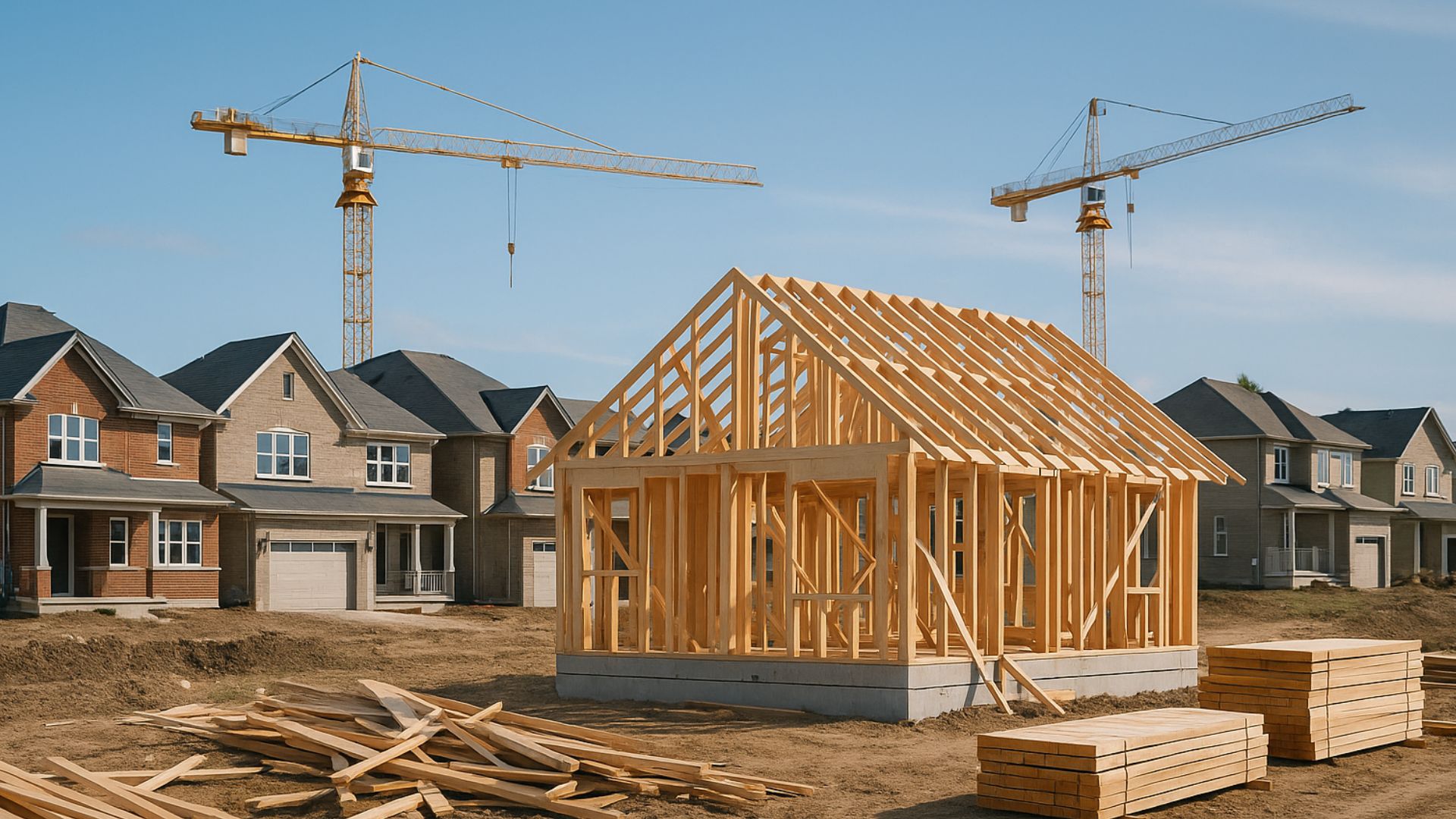
When you hear “housing starts,” think of it as the pulse of new home construction and the moment when builders break ground on new units. In 2025 so far, that pulse is weakening in Ontario. The real question isn’t just is Ontario housing starts declining but it’s how far behind are they falling relative to what buyers, renters, and planners actually need?
Let’s dig into the data, the forces at work, and what it means for homes, prices, and the province’s housing future.
The State of Ontario Housing Starts in 2025
- In Q1 2025, Ontario recorded 12,700 new housing starts, marking a 20.2% drop from Q4 2024 (which had about 15,900 starts) — and the lowest quarterly total since 2009. [1][2]
- The slump isn’t limited to the first quarter. Through August, Ontario’s running total of starts is down roughly 23% year-over-year, making Ontario the only province with such a steep decline this year. Global News
- Nationally, housing starts fell 16% month-over-month in August, pulling the Canadian total to ~245,800 units. In Ontario, starts dropped by ~18,100 units in that same period. [4]
- Canada — excluding Ontario — remains comparatively resilient, leading many analysts to conclude: Canada isn’t in a housing starts slump — Ontario is. [5]
- In the Greater Golden Horseshoe region, 22 municipalities received failing grades for housing starts in H1 2025, with starts down an average of 40% in those areas. [6]
These numbers tell a stark story: production of new housing in Ontario is slipping badly and it’s doing so while demand remains pressing.
Why New Construction Is Lagging
1. Increased Building Costs & Financial Risk
Land, labour, materials, and municipal charges have escalated sharply. For many developers, the margins are too thin or the financing too risky to start new projects.
2. Oversupply of Existing Homes / Competition
With existing home inventory elevated, some buyers gravitate toward resale homes instead of new-builds — making new construction less attractive in many markets. [5][2]
3. Weak Demand Signals from Buyers
High interest rates, affordability pressures, and economic uncertainty have cooled buyer enthusiasm, reducing the incentive for builders to initiate projects.
4. Regulatory & Approval Delays
Municipal red tape, zoning delays, development charge issues, and approval bottlenecks slow down the pace at which new homes can even begin construction.
5. Shifting Builder Sentiment & Risk Aversion
Many developers, especially in condo or multiunit projects, are waiting until pre-sales or financing risks reduce before breaking ground.
6. Provincial Policy Uncertainty
While Ontario has passed legislation like the Protect Ontario by Building Faster and Smarter Act (2025) aimed at accelerating development, effects take time to materialize.
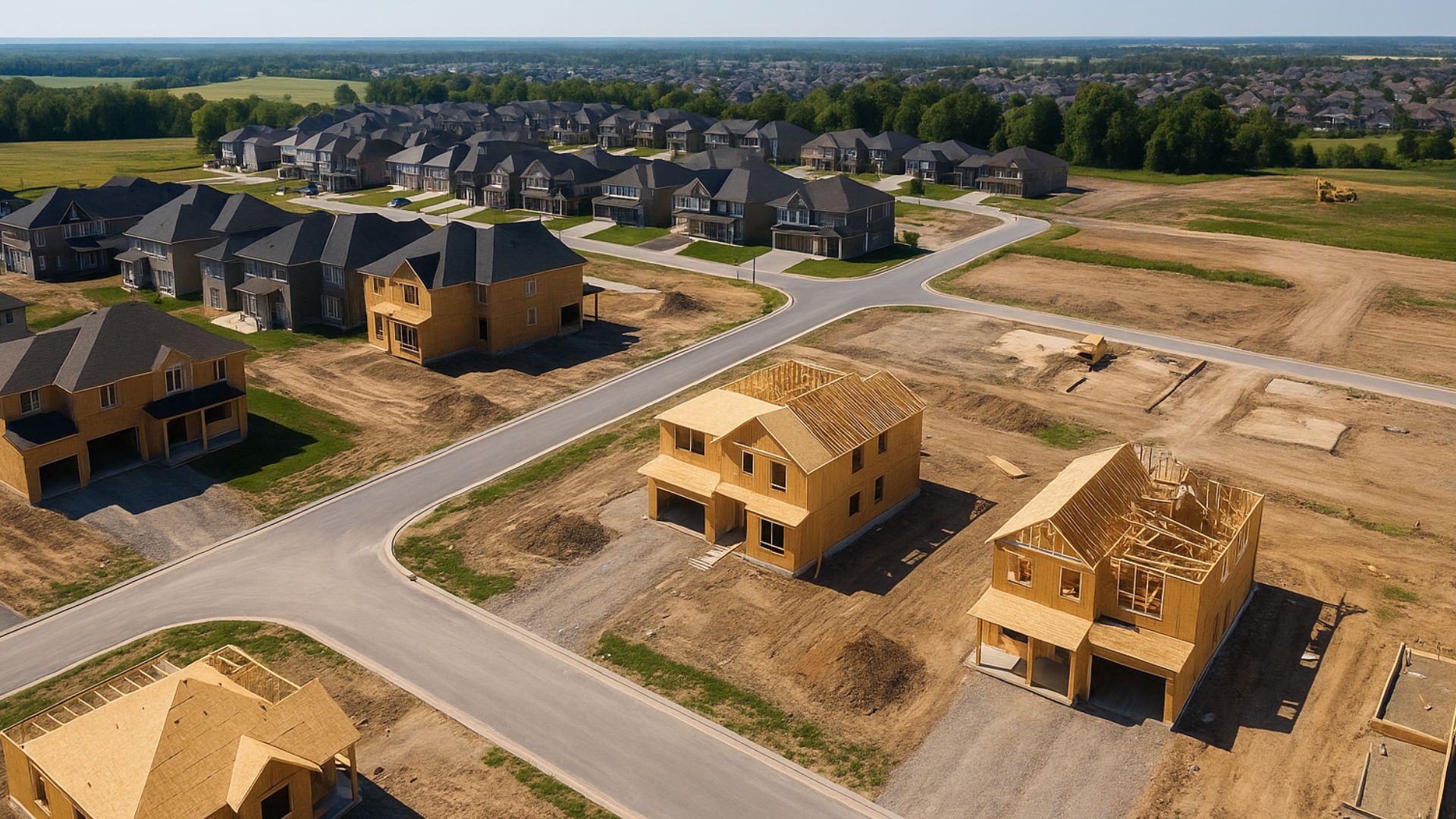
The Demand Side: Are Ontario housing starts meeting need?
Demand hasn’t slowed. Ontario continues to see population growth, immigration, and household formation — all of which demand new housing. Analysts at TD Economics estimate Canada could be short 300,000 housing units between 2024 and 2026 if supply doesn’t catch up. [7]
When starts decline while demand remains, a “construction gap” emerges — one that exerts upward pressure on prices, rental rates, and affordability stress.
In markets where housing starts lag severely (GTA, parts of southwestern Ontario), price pressure and competition in resale will intensify, especially for mid-sized and entry-level homes.
Ready to Build with Confidence. Partner with Bridge Developers. ?
From planning vibrant new communities to delivering sustainable homes, Bridge’s developer team brings expertise, innovation, and trusted partnerships to every project. Let’s shape the future together.
What to Watch (and Do) If You’re a Buyer, Seller, or Builder
- For Buyers / Renters: Expect longer wait times for new inventory, especially for homes or condos in developing neighborhoods. The resale market may remain your best option.
- For Sellers: If your home is move-in ready, you may benefit from less competition from new builds. Demand for existing product may stay relatively strong.
- For Builders / Developers: Focus on approvals, predictable cost structures, and markets where land and risk metrics still allow margin. Timing matters — earlier movers may capture unmet demand.
- For Policymakers: Accelerate approvals, streamline municipal processes, reduce costs, and incentivize high-need product types (attainable homes, mid-density).
FAQs on Ontario Housing Starts & Demand
- Is Ontario housing starts decline a temporary blip?
It’s possible, especially if interest rates ease or policies streamline, but current declines are steep enough to suggest structural pressures. - How much gap is being created?
Rough estimates suggest a shortfall of hundreds of thousands of units across Canada; Ontario is a key contributor to that supply deficit. [7] - Are any regions still starting well?
Some non‑GTA areas may hold up better, though most declines are province-wide, with hotspots like the Greater Golden Horseshoe hit hardest. [6] - Can rate cuts or stimulus reverse the trend?
They can help by lowering costs and boosting demand but recovery in starts will lag underlying demand shifts and regulatory fixes. - When might starts rebound?
Likely in 2026 or beyond, assuming economic stabilization, interest rate relief, and policy reforms take effect.
Sources:
- FAO / Ontario Economic Monitor — Q1 starts 12,700, down from 15,900. Ontario Financial Accountability Office
- MPA “Ontario housing starts slumped to a 15‑year low in Q1.” Mortgage Professional America
- Ontario-run 2025 YTD starts down ~23%. Global News.
- Reuters / Canadian housing starts fall 16% in August; Ontario down 18.1k. TD Economics
- RBC commentary — “Canada isn’t in a housing starts slump — Ontario is.” RBC
- Greater Golden Horseshoe municipalities report steep declines. constructconnect.com
- TD Economics — Canada housing supply shortfall projection. TD Stories
- Global cities report stronger 2025 starts in some local markets (e.g. Ottawa). CityNews Ottawa