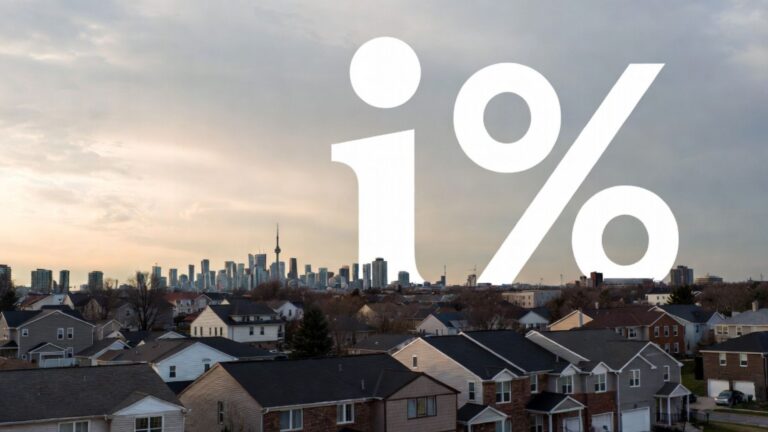

Interest rates have been in everyone’s mind lately. For months, buyers and sellers have tiptoed around the possibility that rate cuts could reignite the housing market. Now, as economists and markets increasingly price in easing, the big question is: Will lower rates actually spark a turnaround in Ontario real estate — or just shift where the momentum flows?
Let’s walk through what’s happening, what might change, and where the real opportunity lies.
The Current State: Rates, Forecasts & Market Sentiment
Ontario, like the rest of Canada, is tuning in closely to the Bank of Canada’s monetary policy. As of mid‑September 2025, the BoC cut its policy (overnight) rate to 2.50%. [2]
Markets and economists are now expecting a series of additional cuts. For instance, BMO forecasts three cuts by Spring 2026, totaling about 75 basis points. [1]
Similarly, a recent Bank of Canada market participants’ survey suggests the policy rate could drop to 2.25% by year-end, with cuts steered by data softness and inflation trends. [7]
But not everyone is in full agreement — some banks expect only a modest cut, while others remain cautious. [4]
So, we have a strong signal that rate relief is likely, but with considerable uncertainty on pace and depth.
What Lower Rates Could Unlock in Real Estate
If rate cuts come and stick, here’s where we could see changes in Ontario’s housing dynamics:
1. Revived Buyer Demand & Pent-Up Activity
Many prospective buyers have been sidelined by high borrowing costs. Lower rates may bring some of them back, especially first-time buyers and those who delayed purchases. Real estate analysts often refer to “pent-up demand” — meaning these buyers were waiting for just this kind of break. [5]
That means more showings, more offers, and possibly a faster turnover in active listings.
2. Greater Mobility & Upgrade Activity
Homeowners who previously held off on moving or upsizing might reconsider. With lower carrying costs, the decision to trade up or relocate becomes more feasible.
3. Pressure on Pricing Floors
Tighter margins in many Ontario markets mean even small rate improvements can support stabilizing (or drifting higher) prices in some submarkets. The combination of easing financing and persistent inventory constraints in some areas could push the price floor upward.
4. Shifts Among Property Types & Regions
Not all home types benefit equally. Detached houses in high-demand suburban or mid-sized cities may experience more benefit than overbuilt condo segments in major urban cores. Similarly, places with constrained supply may see price resilience faster than areas already saturated with inventory.
5. Investor Activity & Rental Dynamics
Investors with cash flow models are sensitive to interest rates. Lower rates could improve return metrics, encouraging renewed investment in rental properties — particularly in high-demand regions. That could shape supply for rentals and influence the buy-to-rent segment.

Why It May Not Be a Magic Wand
We must balance optimism with caution. Rate cuts don’t guarantee a full-blown market rebound. Here are risks and friction points:
- Sticky inflation or upside surprises could stall cuts or force reversals.
- Buyers are cautious after recent volatility — some may wait to see real evidence of rate stability.
- In high inventory markets, supply might still overwhelm demand, muting the impact of rate cuts.
- Leverage, debt levels, and mortgage stress tests may still limit how much buyers can borrow, even with lower rates.
- Regional divergence matters: some markets may respond more than others. Ontario has many micro‑markets (GTA, Ottawa, Windsor, etc.) with different fundamentals.
Ready to Find Your Dream Home with Bridge ?
Whether you’re a first-time buyer or moving up to your forever home, Bridge guides you through every step — from tailored property searches to expert negotiations — so you can buy with confidence.
Strategic Moves If Cuts Happen
If rate cuts materialize or are anticipated:
- Be ready to act early. The window of soft competition may close fast once momentum builds.
- Lock in variable or adjustable debt first. It offers immediate relief if cuts occur.
- Focus on “return potential” markets. Look at areas likely to absorb gains — outer suburbs, transit corridors, emerging growth zones.
- Play the flip side — sellers should gauge appetite. If demand returns quickly, some sellers may underprice to traffic their listing.
- Stay nimble. Monitor data (inflation, jobs, lending) — don’t bet on “cuts will definitely happen.” Adjust accordingly.
FAQs on Interest Rate Cuts & Ontario Real Estate
- Will rate cuts alone push home prices up sharply?
Unlikely. They help ease affordability, but broader price gains depend on demand, inventory, and economic confidence. - When might the next cut come?
Markets expect a cut imminently (September or October 2025), with others possibly later in the year. [7] - Which markets in Ontario will respond first?
Suburban and mid‑sized cities (outside ultra-high-cost cores) may feel the lift sooner. Condo-heavy downtown cores may lag. - Should buyers wait for a cut before buying?
It depends. If you’re ready and financing is in place, acting right after a cut could capture value before competition jumps. - Can sellers benefit too?
Yes. Sellers who price and time their listings right could see faster absorption if demand rebounds.
Sources:
- BMO forecast expects three BoC rate cuts by Spring 2026. Better Dwelling
- BoC lowered its policy rate to 2.50% (September 2025). Bank of Canada+1
- Market participants’ survey—policy rate possibly hitting 2.25% by year‑end. Mortgage Professional
- TD, CIBC, others’ rate cut projections and scenarios. Mortgage Rates & Broker News
- “Pent-up demand” notion in real estate relating to lower rates. Kelowna Real Estate
- RBC housing forecast—Ontario expected to have pricing challenges amid supply/demand pressure. RBC
- Rate cut outlook softens due to housing resilience. Mortgage Professional